The Central Coast sees over 1,200 mm of rain annually, and a lot of that hits weathered Hawkesbury Sandstone and Narrabeen Group shales — materials that don’t forgive drainage mistakes. Our lab team runs slope stability analysis that starts with real core samples, not just textbook assumptions. Whether the site is a cut behind Erina or a fill embankment near Wyong, we measure shear strength, pore pressure response, and joint persistence to feed limit-equilibrium models. Because AS 4678 demands site-specific geotechnical input, we pair lab testing with field data from test pits on accessible slopes and seismic refraction where weathered profiles need depth calibration. The goal is a factor of safety that actually reflects Central Coast ground conditions, not a generic number from a database halfway across the country.
Central Coast slopes fail most often not from weight, but from water — we test both drained and undrained strength to catch the difference.
Technical details of the service in Central Coast NSW
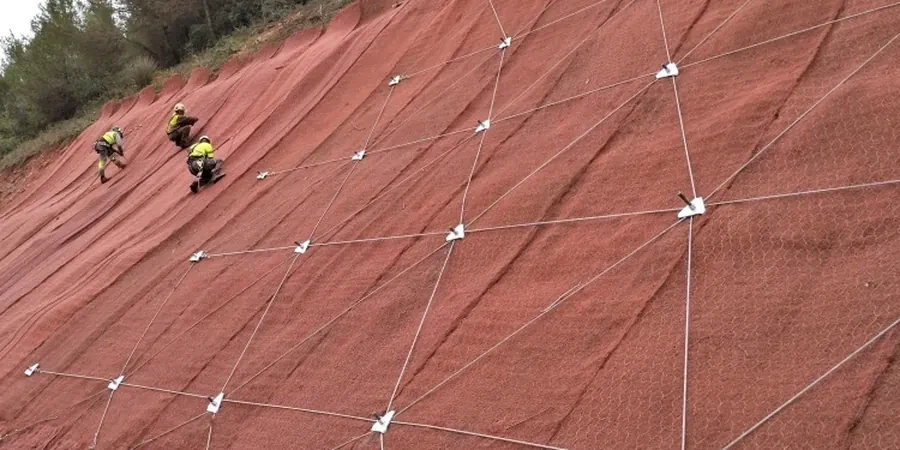
Risks and considerations in Central Coast NSW
A slope that looks stable in August can move in March after two weeks of east-coast low rainfall. We see it repeatedly on the Central Coast: builders finalise a cut, seed the batter, and twelve months later the lower third bulges. The trigger is rarely the cut geometry alone — it’s the combination of a saturated residual clay layer and an undrained loading from uphill development. If the stability analysis skipped soaked triaxial tests or assumed a fully drained profile, the FoS will be dangerously optimistic. Even a 0.1 drop in factor of safety can push a slope past the threshold where creep starts. Our lab insists on testing at the actual field density and moisture profile, because recompacted specimens from a split barrel simply do not replicate the structure of a 30,000-year-old colluvial deposit sitting above a near-horizontal sandstone bench.
Our services
Our slope stability work for Central Coast projects covers the full chain from field investigation to design-ready parameters. Every analysis ties back to lab-measured numbers, not generic correlations.
Design-Parameter Slope Analysis
Limit-equilibrium modelling using triaxial and direct-shear data from your site. We deliver FoS, sensitivity charts, and drainage recommendations formatted for DA submission under Central Coast Council requirements.
Forensic Slope Review
For slopes showing distress — tension cracks, toe bulging, leaning poles — we run back-analysis to determine the operative strength at failure, then forward-model the remediation. Lab testing on undisturbed samples from the slip surface quantifies residual vs peak strength.
Top questions
How much does a slope stability analysis cost in Central Coast NSW?
For a typical residential or small commercial slope assessment with site investigation and lab testing, budgets on the Central Coast generally fall between AU$2,020 and AU$5,820. The range depends on access constraints, number of boreholes or test pits, and whether saturated triaxial testing is required. A steep block in Terrigal with complex drainage will sit at the upper end; a straightforward cut in Wyoming with good exposure may come in lower. We provide a fixed-price proposal after reviewing the site plan and geology.
What triggers a slope stability analysis under Central Coast Council?
Any cut or fill exceeding 1 m depth, construction within the zone of influence of a slope steeper than 18 degrees, or sites mapped in the Landslide Risk category on the Central Coast LEP typically require a geotechnical assessment referencing AS 4678. The council’s DA checklist will flag it, but if you’re building near an escarpment at MacMasters Beach or a steep gully at Lisarow, budget for the analysis early — it can dictate footing setbacks and retaining wall design.
How long does the analysis and reporting take?
From the day fieldwork wraps up, allow roughly 10 to 15 working days for lab testing, modelling, and report drafting. Triaxial tests need about a week for saturation and shearing, and the modelling runs take another two to three days including peer review. If council deadlines are tight, we can sequence the work so preliminary parameters arrive within five working days, with the full AS 1726 report following.