A three-storey apartment block near Terrigal hit refusal at 1.8 metres on weathered sandstone, and the developer thought they could switch to pad footings. The geotech report showed loose sand lenses above the rock. Without piles, differential settlement would crack the slabs within the first wet season. We redesigned the foundation with bored piles socketed into Class III rock. Central Coast sites rarely give you a textbook profile. You get sandstone ridges at Umina, deep sands at Bateau Bay, and reactive clays through the Ourimbah valley. Pile foundation design here means interpreting borelogs and CPT data together, then sizing piles for skin friction and end bearing across variable strata. The water table sits high across much of the coastal plain east of the M1, so temporary casing and tremie concrete placement are standard in our designs, not optional extras.
Good pile design on the Central Coast starts with understanding the Triassic sandstone surface—it is never as flat as the contour map suggests.
Technical details of the service in Central Coast NSW
- Socket design in Class II to Class V sandstone using Williams & Pells method
- Lateral load analysis with p-y curves for sloping sites near Brisbane Water
- Pile group efficiency calculations accounting for 3D spacing effects
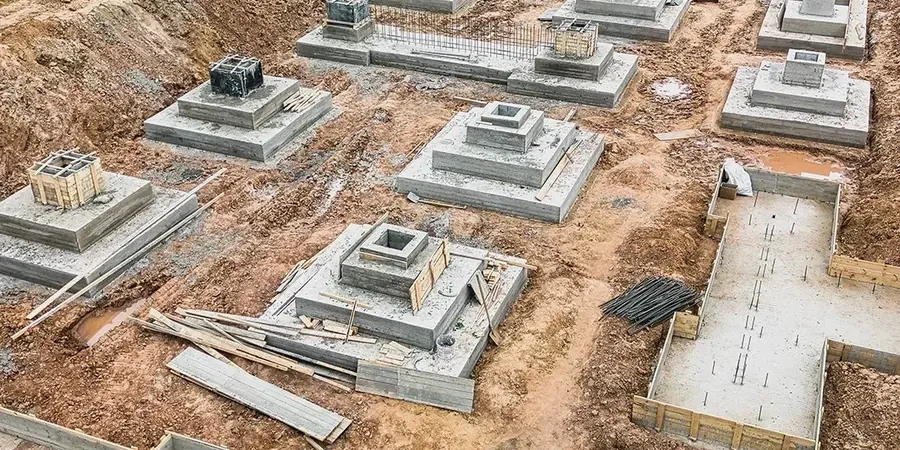
Risks and considerations in Central Coast NSW
Coastal salt spray and high groundwater acidity east of the M1 accelerate concrete degradation. Pile foundation design for Central Coast sites within 500 metres of the ocean must specify minimum cover, sulphate-resistant cement, and sometimes epoxy-coated reinforcement. Inland sites around Mangrove Mountain face a different problem: reactive clay soils that shrink and swell with seasonal rainfall. Piles driven or bored through these clays experience negative skin friction when the soil contracts away from the shaft. We calculate downdrag loads explicitly and add them to the structural capacity requirements. Sites near the Wyong River floodplain carry liquefaction potential in the loose saturated sands—our designs incorporate post-liquefaction settlement checks and lateral spreading assessments derived from seismic CPT correlations.
Our services
We cover the full design chain from site investigation interpretation to construction-phase support across the Central Coast.
Bored pile design
Cast-in-situ piles from 450 mm diameter, with socket design into Hawkesbury Sandstone and temporary casing specified through sand layers.
Driven pile design
Precast concrete or steel H-piles for sites where vibration is acceptable and refusal depths are predictable across the site.
Pile load test specification
Static load test and high-strain dynamic test procedures written to AS 2159, including acceptance criteria for the Central Coast's variable ground.
Top questions
How deep do piles need to go on Central Coast sites?
Depth depends entirely on rock level and soil profile. On ridgelines around Gosford, piles can reach design capacity at 3 to 5 metres. In the Tuggerah floodplain, 15 to 20 metres is common. We determine target depth from borehole data and confirm it during construction with socket inspection.
What does pile foundation design cost for a residential project?
For a typical Central Coast residential project, pile foundation design fees range from AU$2,380 to AU$10,860 depending on the number of piles, site complexity, and whether load testing is required. We provide fixed-fee proposals after reviewing the geotechnical report.
Can you design piles for sloping sites near Brisbane Water?
Yes. Sloping sites require lateral load analysis for the piles. We model p-y curves for the soil and rock layers and check bending moments and shear forces in the pile shaft. This is standard in our design approach for waterfront properties.
What information do you need to start a pile design?
We need a geotechnical site investigation report with borehole logs, laboratory test results, and a site plan showing the structure layout. If you do not have a report yet, we can arrange the drilling and testing through our investigation team.
Do you provide construction-phase support after the design?
Yes. We attend site for pile socket inspections, review pile installation records, and sign off on hold points. This is included in our design scope for Central Coast projects.