The coastal humidity and undulating terrain between Gosford and Wyong create a patchwork of ground conditions that demand careful subsurface investigation. In the Central Coast, exploratory test pits are often the first direct look at what lies beneath the grass, revealing everything from weathered Hawkesbury sandstone to pockets of estuarine clay. With an average annual rainfall around 1,300 mm, moisture-driven soil movement is a recurring concern for slab-on-ground designs and retaining structures. A properly logged test pit lets the engineering team map lithology and collect undisturbed samples right where the footing will sit. The approach aligns with AS 1726 and avoids the guesswork that leads to costly over-excavation. Where the profile suggests loose granular layers, we routinely pair pit observations with SPT drilling to capture penetration resistance at depth, giving a fuller picture for the structural engineer. In subdivisions around Tuggerah and Erina, test pits also help identify uncontrolled fill that old aerial photos miss.
The best foundation design on the Central Coast starts with a trench that shows the soil fabric exactly as it sits — no remoulding, no extrapolation.
Technical details of the service in Central Coast NSW
Risks and considerations in Central Coast NSW
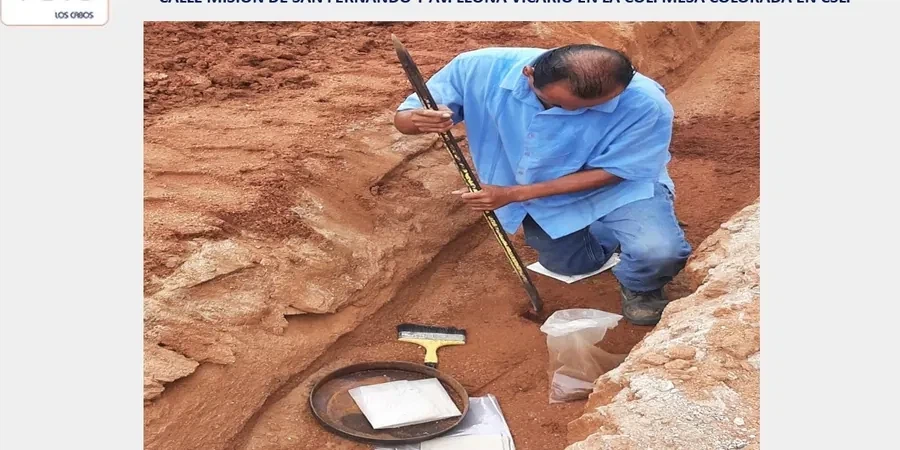
The excavator bucket peels back the topsoil and the first thing the engineer watches for is colour change — grey mottled clay often signals a seasonally saturated zone, while clean white sand below the water table can run and collapse the face without warning. On Central Coast sites carved into hillside, the pit exposes the real risk: residual clay sitting on a sloping rockhead that acts as a natural slip surface after prolonged rain. Loose sand lenses within the profile, when saturated during a storm, can lose strength abruptly. The logging sheet captures these details because they dictate whether the footing needs deepening, the retaining wall needs subsoil drainage, or the pavement subgrade needs lime stabilisation. A pit that stays dry during excavation tells a different story from one that fills with groundwater within minutes, and that difference changes the earthworks specification. Ignoring these small field clues turns a manageable site condition into a long-term maintenance headache for the owner.
Our services
A single exploratory test pit can answer many questions, but the value multiplies when it feeds into a broader investigation strategy. The following services are routinely combined with pit programs on the Central Coast to turn field observations into design parameters.
In-Situ Density Testing
Sand cone or nuclear gauge tests performed directly on the pit floor or in adjacent compacted fill, providing the field density and moisture content needed to calculate relative compaction to AS 3798.
Laboratory Soil Classification
Samples collected from each distinct layer are tested for particle size distribution, Atterberg limits, and Emerson class at a NATA-accredited laboratory, giving the reactivity indices required for AS 2870 site classification.
Combined Test Pit and Borehole Programs
Where the pit reaches refusal at shallow depth, a drill rig is mobilised to extend the investigation through weathered rock and confirm the depth to fresh sandstone, tying surface observations to deeper stratigraphy.
Top questions
How much does an exploratory test pit cost on the Central Coast?
A single test pit logged to AS 1726 standards, including backfill and a brief factual report, typically runs between AU$850 and AU$1,320 for accessible sites in the Gosford–Wyong corridor. The final figure depends on machine size, number of pits, travel distance, and whether laboratory testing such as Atterberg limits or particle size distribution is added. Deeper pits in rock or tight-access blocks on the Bouddi Peninsula may push toward the upper end due to slower excavation and additional safety controls.
What depth can an exploratory test pit reach in Central Coast ground?
In practice, most pits in the Central Coast reach 3.0 to 4.5 metres before encountering refusal on sandstone or extremely dense gravels. In the alluvial flats around Wyong, pits can occasionally go deeper in soft clay, but stability of the excavation walls becomes the limiting factor — anything beyond 1.5 m requires benching or shoring under current work health and safety obligations. Where the investigation needs to go deeper than 4.5 m, a complementary drill rig campaign is usually more practical.
Are exploratory test pits enough for a Class 1a residential slab design?
For many Class 1a sites on the Central Coast, yes — provided the pits are taken to the depth of influence of the footing and the soil profile is logged by a geotechnical engineer who understands AS 2870 site classification. The pit exposes the actual soil fabric, allowing the practitioner to identify uncontrolled fill, assess reactivity, and decide whether additional laboratory tests like shrink-swell index or Emerson class are warranted. On deep sand profiles or slopes steeper than 1:4, supplementary boreholes or hand augers are often added to extend the investigation depth.
What safety measures do you apply when excavating test pits on residential blocks?
Every test pit on the Central Coast is treated as a trenching operation: the excavator operator works away from overhead services, the pit is benched or battered if deeper than 1.5 m, and a spotter monitors ground movement throughout. Before the machine arrives, the team lodges a Dial Before You Dig enquiry and conducts a service walkover with a cable locator. Once logging and sampling are complete, the pit is backfilled in lifts with the excavated material and compacted with the excavator bucket — we never leave an open pit unattended on a residential or commercial site.