A lot of local builders learn the hard way that the standard pavement recipe doesn't work around here. You lay a beautiful asphalt driveway on the Central Coast, and twelve months later it looks like a dried-up creek bed. The culprit isn't poor workmanship; it's usually the ground underneath. We see it constantly from Umina to Wyong: reactive clay subgrades that swell with the rain and shrink in the sun, transferring stress straight up to the bitumen. Before you even think about bitumen layers or aggregate size, the subgrade needs a proper interrogation. This is where a targeted geotechnical investigation saves you the embarrassment of warranty callbacks. We often pair a test pit program with laboratory triaxial testing to model how the soil will actually behave under traffic loads, not just textbook assumptions.
Designing a pavement without a CBR profile is like building a house without knowing the wind rating—it might stand, but you're betting the farm on it.
Technical details of the service in Central Coast NSW
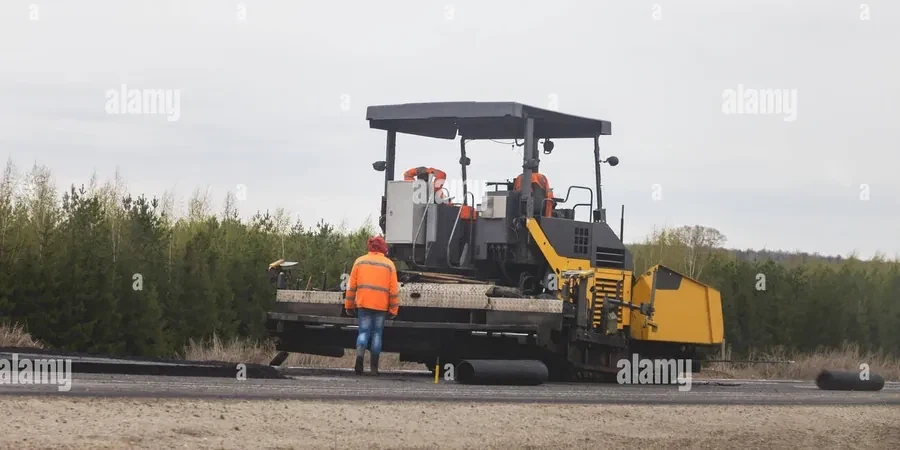
Risks and considerations in Central Coast NSW
The Central Coast sits on some of the most reactive Quaternary alluvium in New South Wales, and the risk profile changes with the seasons. Ignoring the subgrade's shrink-swell potential here isn't just a theoretical oversight; it's a direct path to longitudinal cracking within the first two years. Deep-seated rutting in the wheel paths is another tell-tale sign that the design didn't account for the real-world modulus of the base layer. What stings most is the cost of reconstruction. Cutting out and replacing a failed pavement costs three to four times what the initial investigation would have cost. The site's drainage also plays a huge role—blocked subsoil drains in a wet La Niña cycle can turn a stiff clay into a slurry. We mitigate these risks by specifying geogrid reinforcement where the retaining structures interface with the pavement edge, ensuring the whole corridor functions as a single system rather than independent parts.
Our services
We wrap the geotechnical and pavement engineering into a single scope so you aren't left translating a soil report into a pavement thickness on your own. Here's what we typically deliver for Central Coast projects:
Subgrade CBR Profiling
Field and soaked laboratory California Bearing Ratio tests to establish the strength profile along the alignment, not just at one chainage.
Reactivity Assessment
Atterberg limits and shrink-swell index testing to classify the soil's volume change potential and specify appropriate subgrade treatments.
Pavement Thickness Design
Granular overlay design using Austroads mechanistic-empirical methods, balancing traffic loading, material stiffness, and fatigue life.
Construction QA/QC Testing
Field density compliance via nuclear gauge or sand cone, plus proof rolling observations to confirm the design assumptions hold during construction.
Top questions
What is the typical cost range for a flexible pavement design package on the Central Coast?
Depending on the length of the pavement and the complexity of the subgrade, a full geotechnical investigation and pavement design report generally runs between AU$2.770 and AU$8.970. A short residential driveway on good ground sits at the lower end, while a long commercial access road with variable clays and deep testing will push towards the upper bound.
Why do flexible pavements crack so quickly in this region?
It almost always traces back to reactive clay subgrades that haven't been properly characterised. The soil's volume change during wet-dry cycles produces differential movements that exceed the tensile strain capacity of the asphalt, causing fatigue cracking from the bottom up.
How do you determine the right pavement thickness?
We use the Austroads mechanistic procedure. This means we measure the subgrade's resilient modulus or CBR in the lab, tally the expected equivalent standard axles—or ESAs—over the design life, and then calculate the required granular and asphalt thickness so the horizontal strain at the base of the asphalt stays below the fatigue limit.
Can you improve the existing soil instead of cutting it all out?
In many cases, yes. If the clay is highly plastic but not organic, lime or cement stabilization can transform the upper 200 to 300 millimetres into a bound subbase. This approach reduces the imported quarry material and often speeds up the program, especially on sites with limited access.