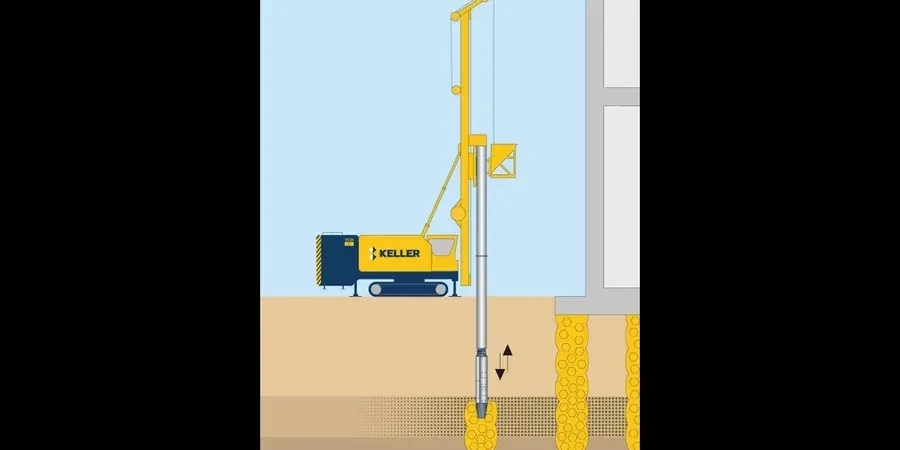
A warehouse slab in Somersby showed 40 millimetres of differential settlement within six months. The culprit was loose, wind-blown sand that wasn't densified before construction. On the Central Coast NSW, where the coastal geology shifts from Hawkesbury sandstone to deep Quaternary sands, untreated ground can fail fast. Vibrocompaction design is the controlled process of using depth vibrators to rearrange soil particles into a denser state. It increases bearing capacity and eliminates the collapse potential that plagues poorly compacted fills. The team brings field data from sites near Gosford, Woy Woy and The Entrance to every design. We pair the vibro plan with in-situ permeability testing to verify that densification doesn't trap groundwater, and we often run CPT testing before and after treatment to measure the friction ratio change directly.
A well-designed vibrocompaction grid can reduce post-construction settlement to less than 15 millimetres over the structure's design life.
Technical details of the service in Central Coast NSW
Risks and considerations in Central Coast NSW
A common mistake on the Central Coast NSW is treating all sandy sites the same. A builder in Tuggerah once assumed the natural sand was dense enough for a three-storey apartment. They skipped the geotechnical investigation. Twelve months later, cracks appeared in the blockwork. The sand had a relative density of just 35 percent. Loose sands under cyclic loading, such as traffic or minor seismic events, can densify suddenly and cause structural damage. Liquefaction risk is real even in regions of low seismicity when the water table is high. Our design process eliminates this risk by specifying energy input per compaction point and validating results with post-treatment CPT soundings. We also check for buried organic layers. If a peat lens sits below the sand, vibrocompaction alone won't fix the problem. The design must then incorporate a load transfer platform or excavation of the soft material. Every design includes a quality control plan that maps out verification points and acceptance criteria before construction starts.
Our services
Ground improvement on the Central Coast requires a clear sequence. Our vibrocompaction design service breaks down into four stages.
Pre-Treatment Site Characterisation
We drill and sample to map the granular layers. Grain size analysis and Atterberg limits confirm the soil is suitable for deep vibratory compaction.
Compaction Trial and Grid Design
A test section with varying probe spacing and energy levels defines the optimum grid. We measure surface settlement and run CPTs to calibrate the design.
Production Compaction Specification
We issue detailed drawings showing compaction point locations, probe penetration depth, hold times, and water pressure. The spec aligns with AS 4678 requirements.
Post-Treatment Verification
CPT, DPSH or PMT testing across the grid confirms the achieved relative density. We sign off on bearing capacity and settlement performance for the structural designer.
Top questions
What soil types on the Central Coast benefit most from vibrocompaction?
Clean sands and gravelly sands with less than 15 percent fines respond best. Sites in Woy Woy, Umina Beach, and parts of Gosford often have these deposits. Silty sands need a modified approach, and clays won't densify with this method.
How much does a vibrocompaction design package cost in Central Coast NSW?
Design fees range from AU$2,530 to AU$8,040 depending on the treated area, number of compaction points, and verification testing required. A small warehouse pad sits at the lower end. A multi-building residential site with deep sand and high groundwater falls at the upper end.
How deep can vibrocompaction reach on the Central Coast?
Standard rigs reach 25 metres. Most coastal sand deposits on the Central Coast NSW are fully treated within 15 to 20 metres. Deeper treatment is possible with larger rigs when needed.
Does vibrocompaction prevent liquefaction?
Yes, when the design achieves a relative density above 70 percent. The process rearranges loose sand grains into a dense state that resists pore pressure buildup during seismic shaking. We verify this with pre- and post-treatment CPT data.
What verification testing do you include?
CPT soundings are standard. We run at least one test per 300 square metres of treated area. For critical structures, we add DPSH or PMT tests. Surface settlement monitoring during compaction provides immediate feedback on volume reduction.