Drilling on the Central Coast frequently encounters a transition zone between the weathered Hawkesbury sandstone ridgelines and the deep Quaternary alluvium that fills the coastal valleys around Gosford and Wyong. The SPT (Standard Penetration Test) remains the most practical tool for mapping that contact, because the blow count shifts abruptly when the auger teeth bite into decomposed rock, giving the engineer a clear depth-to-refusal benchmark. We run these tests to AS 1726 methods with a safety hammer calibrated for energy transfer, producing N-values that contractors across Erina, Tuggerah and Woy Woy can trust for bearing capacity estimates. For projects where the sand layer is saturated and fines content is low, combining the SPT with liquefaction analysis helps determine the cyclic stress ratio before the footing design is locked in. The Central Coast presents a unique geotechnical mosaic, and skipping the SPT means guessing where the good ground actually starts.
On the Central Coast, an SPT N-value below 4 in saturated sand isn't just a number—it's a liquefaction flag that rewrites the foundation system before the first cubic metre of concrete ever arrives.
Technical details of the service in Central Coast NSW
Risks and considerations in Central Coast NSW
The risk profile for SPT-based design shifts dramatically between the flat alluvial plains around Wyong and the steep sandstone slopes above Avoca Beach. In the Wyong floodplain, N-values of 2 to 6 in the upper 4 metres are common, with groundwater at 1.2 metres in a wet season, meaning loose saturated sands that demand a liquefaction screening under AS 4678 before any retaining wall or footing design proceeds. On the ridgelines, the same SPT rig hits N-values above 30 within the first metre of weathered rock, and the geotechnical concern flips from bearing failure to excavation difficulty and rock socket friction. A single site classification—Class S, M, H or E—can vary across the same lot by more than one class, which is why AS 2870 slab-on-ground designs on the Central Coast routinely require a borehole grid rather than a single SPT log. When the profile includes soft estuarine clays with N-values below 1, we often discuss stone columns as a ground improvement alternative to deep piling, because the SPT data quantifies the undrained shear strength that governs column spacing.
Our services
Our SPT program on the Central Coast is supported by an ISO/IEC 17025-accredited laboratory that processes the disturbed samples the same day they are recovered, so the particle size distribution and Atterberg limits are ready before the rig demobilises. We run two complementary service lines that turn raw N-values into actionable geotechnical parameters.
SPT Drilling and Field Logging to AS 1726
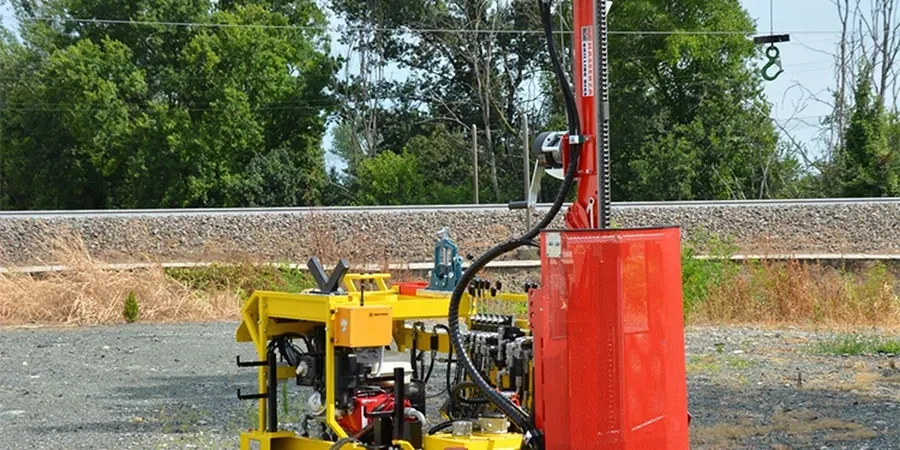
Mobilisation with truck-mounted or track-mounted rigs across residential, commercial and infrastructure sites from the M1 corridor to the Bateau Bay headlands. Each borehole log includes N60 values, recovery ratio, groundwater observations and a preliminary soil description by an engineering geologist present at the rig.
SPT-Based Foundation Recommendations
Interpretative report covering bearing capacity from N-value correlations, settlement estimates, liquefaction screening for saturated sands, and site classification to AS 2870. We provide specific recommendations for pier-and-beam, waffle pod slabs or piled solutions depending on the SPT refusal depth and the structural load schedule.
Top questions
How much does an SPT investigation cost for a standard residential block on the Central Coast?
For a single-dwelling lot requiring three boreholes to refusal depth, the cost typically ranges from AU$740 to AU$1,050, depending on access conditions, auger refusal depth and the number of disturbed samples requiring laboratory classification. Steep sites with limited rig access may require a track-mounted unit, which can push the cost toward the upper end of that range.
What does the N-value actually mean for my slab design?
The N-value is the number of hammer blows required to drive the split-spoon sampler 300 mm into the soil, and it correlates empirically with relative density in sands and consistency in clays. Under AS 2870, N-values below 5 in the founding layer often push the site classification toward Class E or P, requiring stiffened raft slabs or deep footings, while N-values above 15 usually support a standard waffle pod slab on controlled fill.
How long does an SPT drilling program take on the Central Coast?
A three-borehole residential program is typically completed in one day of drilling, with the geotechnical report issued within five to seven business days. The laboratory turnaround for particle size distribution and Atterberg limits adds approximately three days, though we can expedite results when the concreting schedule depends on the site classification.
Do I need an SPT if the site is on sandstone bedrock?
Surface exposure of Hawkesbury sandstone does not eliminate the need for SPT drilling, because the depth and quality of the rock mass can vary sharply over short distances. The SPT refusal depth confirms the rockhead elevation across the footprint, and the driller logs the degree of weathering—Class IV versus Class II sandstone—which affects the allowable end-bearing pressure under AS 4678 and the excavation method the contractor must budget for.