Coastal humidity and sporadic, intense rainfall define much of the Central Coast, creating a narrow window where compaction targets are actually achievable. The residual clayey sands around Gosford and the weathered Hawkesbury sandstone further north both demand precise moisture-density relationships to avoid costly rework on subdivision platforms, access roads, and commercial pads. Standard or Modified Proctor testing resolves those relationships before a single roller hits the fill, giving earthworks supervisors a defensible target rather than a guess. Our NATA-accredited laboratory runs both methods under AS 1289.5.1.1 and AS 1289.5.2.1, delivering results that hold up under RMS and council scrutiny. When the site investigation reveals variable borrow sources, we often pair Proctor curves with a sand cone density program to verify field compliance layer by layer.
A Proctor curve is not a single number — it is the compaction envelope your earthworks team will live by for the duration of the project.
Technical details of the service in Central Coast NSW
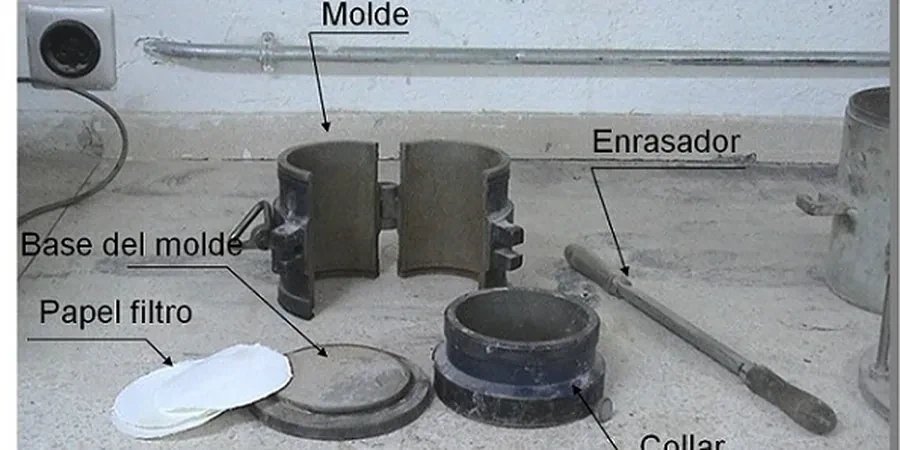
Risks and considerations in Central Coast NSW
The Central Coast has transitioned from holiday towns to a fast-growing commuter belt with large greenfield subdivisions pushing into hillside catchments. Many of these sites contain fill of unknown provenance — sometimes old sandstone floaters, sometimes uncontrolled building rubble — and that legacy fill nearly always fails a compaction audit if Proctor targets were never established. A developer who skips the test risks differential settlement that cracks pavements within two wet-dry cycles, followed by council-ordered remediation that costs far more than the initial lab work. Even well-graded imported fill can be deceptive: a one-percent swing in moisture content above optimum can trap pore pressure that softens the formation under traffic. We see this pattern repeatedly across the Wyong and Gosford LGA, particularly on slopes where runoff concentrates and infiltrates the subgrade before the first seal is applied.
Our services
Our Proctor testing forms part of a broader earthworks quality assurance workflow tailored to Central Coast conditions. Each service below is delivered through the same NATA-accredited laboratory, keeping your project documentation consistent from pre-construction through to final compaction sign-off.
Standard Proctor (AS 1289.5.2.1)
Four-point moisture-density curve using a 2.7 kg rammer, suited to residential fill, landscaping bunds, and light-duty car parks where compaction effort is moderate.
Modified Proctor (AS 1289.5.1.1)
Five-point curve with a 4.9 kg rammer replicating heavy roller compaction; specified for arterial roads, industrial slabs, and any RMS-governed earthworks on the Central Coast.
Field density correlation package
Proctor curve plus on-site nuclear gauge or sand cone testing, with weekly reporting that tracks relative compaction against the lab target across multiple fill zones.
Top questions
What does a Proctor test cost on the Central Coast?
For projects around Gosford, Wyong, and the broader Central Coast, a single Standard or Modified Proctor determination typically ranges from AU$150 to AU$340, depending on the number of points required and whether oversize corrections are needed.
How do I know whether to specify Standard or Modified Proctor?
The choice is driven by the compaction equipment and the structural demand. Standard Proctor suits pad-foot rollers and residential fill; Modified Proctor matches heavy vibratory rollers used on RMS-spec roads and industrial hardstands. Our engineers can confirm the right method once we review your earthworks specification and the proposed plant list.
Can you run a Proctor test on material with gravel and cobbles?
Yes, we apply the oversize correction detailed in AS 1289.5.4.1. We sieve the material, test the minus-19 mm or minus-37.5 mm fraction, and then mathematically adjust the result to account for the coarse fraction, avoiding the unrealistic densities that occur when oversize particles are simply discarded.
How long does it take to get a NATA-endorsed Proctor report?
Standard turnaround is three to five working days from sample receipt. We can expedite to 48 hours for urgent programs, which is particularly useful when earthworks crews are on standby and weather windows are closing.