The Central Coast sits on a complex geological patchwork of Hawkesbury sandstone ridgelines, deep Quaternary alluvial valleys, and wind-blown coastal sands stretching from Woy Woy to The Entrance. A soil mechanics study here has to account for sudden transitions between rock and soft sediment within a single site. We run physical index testing, consolidation, and shear strength determination to give builders a clear picture of what lies beneath the surface. The Gosford-Lake Macquarie corridor regularly encounters residual clay profiles over sandstone with groundwater perched at 2 to 4 meters depth. These conditions demand accurate effective stress parameters for foundation design. Our laboratory processes undisturbed Shelby tube samples and SPT-driven split spoon specimens following AS 1289 protocols. For sites near Brisbane Water where soft estuarine clays appear, we often pair the soil mechanics study with a CPT test to establish a continuous stratigraphic log without disturbing sensitive fabric.
A proper soil mechanics study replaces risk with numbers: shear strength, compressibility, and swell potential quantified sample by sample.
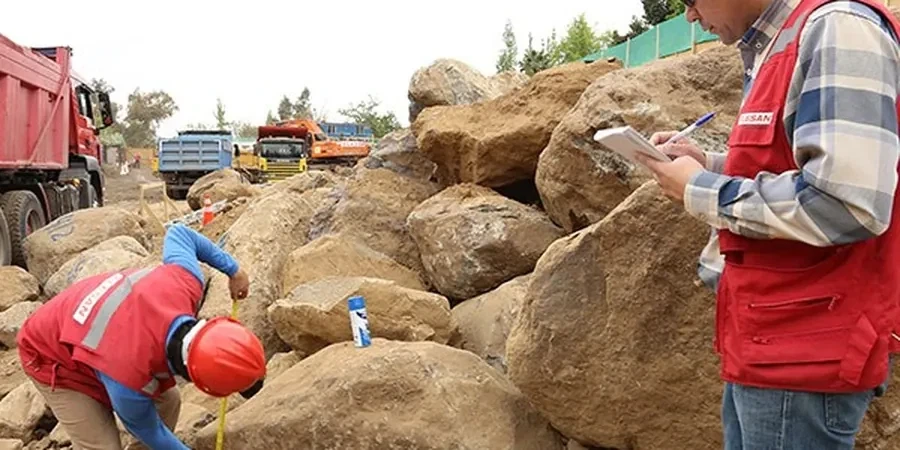
Technical details of the service in Central Coast NSW
Risks and considerations in Central Coast NSW
Coastal humidity and seasonal storms create a wet-dry cycle that punishes reactive soils. Central Coast slabs crack when moisture migrates under edge beams, and that failure starts with a missing or incomplete soil mechanics study. The Gosford basin also carries moderate seismic hazard per AS/NZS 1170.4, requiring site classification into Class A through E based on shear wave velocity or SPT blow counts. Soft estuarine deposits along Tuggerah Lake can amplify ground motion beyond what a desktop estimate would suggest. Settlement risk compounds this: organic silts and loose sands compress unevenly under load, tilting structures within the first five years. A lab-based consolidation curve gives the designer a time-dependent settlement forecast. Without it, you are guessing on differential movement. The data from a soil mechanics study also feeds into retaining wall design, where active and passive earth pressure coefficients depend directly on the friction angle measured in the triaxial cell.
Our services
A soil mechanics study on the Central Coast runs as a structured sequence from field sampling through laboratory testing and final engineering interpretation. Each step follows AS 1289 methods and is calibrated to the local geology.
Physical and index testing
Moisture content, Atterberg limits, particle size distribution, linear shrinkage, and soil classification to AS 1726. We need this on every borehole sample to map the profile across the Central Coast.
Strength and compressibility
CU triaxial, direct shear, and oedometer consolidation. We measure the parameters that go directly into bearing capacity and settlement calculations for footings, slabs, and piles.
Reactivity and special testing
Emerson dispersion, pinhole testing, and swell pressure measurement. Critical for the reactive clays common in the Gosford-Wyong corridor where AS 2870 requirements apply.
Top questions
How much does a soil mechanics study cost for a residential build on the Central Coast?
For a standard residential block on the Central Coast, a soil mechanics study with site drilling, sampling, and lab testing typically runs between AU$4,440 and AU$8,620. The range depends on borehole depth, number of samples, and whether we need triaxial or consolidation testing beyond the basic index suite. A site on weathered Hawkesbury sandstone costs less to investigate than one on deep estuarine clay near Tuggerah Lake.
What AS 1726 investigation category does my Central Coast project need?
That depends on the geotechnical complexity class under AS 1726. A single-storey dwelling on level ground with known sandstone at shallow depth may fit Category 1. Multi-storey builds, sites near Brisbane Water with soft clays, or slopes steeper than 10 degrees usually fall into Category 2 or 3 and need more boreholes and lab testing. We confirm the category during the desktop review before any drilling.
How long does the lab testing take after the boreholes are drilled?
Standard index testing (moisture, Atterberg, particle size) takes 5 to 7 working days from sample receipt. Triaxial and consolidation testing adds another 10 to 14 working days because the oedometer and triaxial stages run at strain rates dictated by pore pressure dissipation. We deliver the final geotechnical report within three to four weeks of completing fieldwork for a typical Central Coast project.